
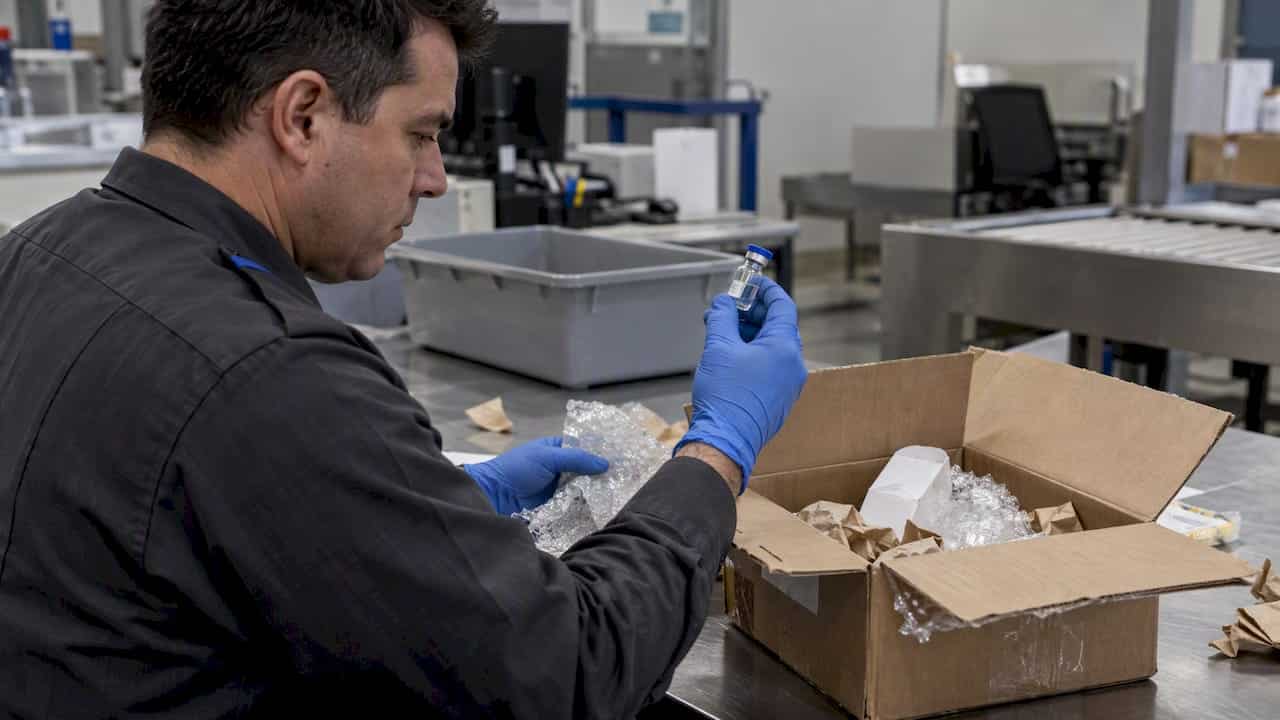
Short answer: most injectable peptides sold online are treated as prescription drugs in Canada, and unauthorized orders are subject to detention and seizure by the Canada Border Services Agency, with referral to Health Canada. If your research or lab work genuinely needs peptides, sourcing from an authorized Canadian supplier avoids the legal exposure and the shipping uncertainty that comes with ordering from abroad.
TL;DR:
- Check the eight digit Drug Identification Number in Health Canada’s database; mismatched ingredients, strength, or route indicate the product has not been authorized.
- After a parcel is flagged, tracking may show inspection or government referral; Health Canada’s review can take days or weeks before return, destruction, or seizure.
- Only nonresident visitors carrying medication for their own treatment qualify, generally for up to 90 days; Canadian residents cannot use the exception for mail orders.
- Commercial import requires an appropriately licensed business with listed manufacturing sites; a certificate of analysis supports quality checks but cannot replace the required licence.
- For human therapeutic use, choose a licensed pharmacy dispensing a prescription drug with a valid DIN; research grade supply is for nonclinical work, not injection.
Table of Contents
- How Health Canada classifies peptides and why a DIN matters
- CBSA detention and referral: what happens when shipments are flagged
- Personal-use exceptions and who may legally import prescription drugs
- Why “research use only” labels and marketing claims don’t prevent seizure
- If your package is detained or seized: a practical checklist
- Lawful Canadian sourcing option: how a domestic, COA-backed supplier reduces import risk
- Packaging and labelling requirements for peptide shipments
- Tariffs, taxes, and fees for peptide imports
- The import declaration process for peptide shipments
- Commercial versus personal peptide shipments at the border
- Why following these rules protects researchers and institutions
- Sourcing peptides in Canada without the border risk
- FAQ
- Sources
How Health Canada classifies peptides and why a DIN matters
Under the Food and Drugs Act, a product counts as a drug when it’s sold or represented for use in diagnosing, treating, mitigating or preventing a disease, or for restoring, correcting or modifying an organic function. Most injectable peptides, including popular research compounds, fall squarely into that definition because they’re marketed to affect how the body works, regardless of whether the seller calls them “research chemicals.”
That classification is why Health Canada warns that injectable peptides bought online are often unauthorized and can seriously harm the people who use them. An authorized drug carries a Drug Identification Number, an eight-digit code printed on the label that confirms Health Canada has reviewed the product for safety, efficacy and quality before it reached the market.
A DIN tells you three things at a glance:
- The product has gone through Health Canada’s review process before being sold as a drug.
- The label matches an approved formulation, so the active ingredients, strength and dosage form are verified.
- The manufacturer is accountable to Health Canada for ongoing quality and safety reporting.
You can confirm whether a product carries a legitimate DIN by searching Health Canada’s Drug Product Database, which lists the manufacturer, active ingredients, strength and approved route of administration for every authorized drug in Canada. If a peptide product has no DIN, or the DIN printed on it doesn’t match what’s in the database, that’s a clear signal the product hasn’t been through Health Canada’s review.
A DIN is a computer-generated number assigned only after Health Canada reviews a drug’s safety, efficacy and quality. That review process is the legal line between an authorized pharmaceutical and an unregulated import.
CBSA detention and referral: what happens when shipments are flagged
The Canada Border Services Agency inspects incoming parcels for goods that may contravene federal law, and prescription drugs without proper authorization are a common trigger. When an officer suspects a package contains an unauthorized drug, including peptides without a valid DIN, the shipment doesn’t simply get released or returned automatically.
Here’s the general sequence once a parcel is flagged:
- Detention. CBSA holds the shipment at the border or mail facility rather than releasing it to the addressee.
- Referral to Health Canada. Under Memorandum D19-9-1, CBSA refers suspected unauthorized drug shipments to Health Canada, which has authority over admissibility decisions for health products.
- Admissibility decision. Health Canada reviews the product against its regulatory requirements and determines whether it can enter the country, must be returned to the sender, or is seized outright.
- Notification. The recipient typically receives a detention notice or sees a status change in courier tracking, though the level of detail varies by carrier.
Turnaround time isn’t fixed. Some parcels clear within days if documentation resolves quickly, while others sit for weeks as Health Canada works through its referral queue. Recipients rarely get a precise timeline, and the shipment can be returned to sender, destroyed or formally seized depending on what the review finds.
Pro Tip: Check your courier’s tracking page for terms like “held for inspection” or “referred to government agency,” which usually mean your parcel has already been flagged before you’ve been formally notified.
Personal-use exceptions and who may legally import prescription drugs
Canada does allow a narrow personal-use exception for prescription drugs, but it’s built for visitors to Canada, not for residents ordering from abroad. Section C.01.045 of the Food and Drug Regulations and related CBSA guidance permit a non-resident entering Canada to bring in a single course of treatment, generally considered a quantity sufficient for personal use during a short-term visit, for their own medical use while travelling.
That exception depends on a few conditions:
- The traveller must be a visitor, not a Canadian resident, and the drug must be for their personal use during their stay, and the quantity should be reasonable for the length of the visit.
- The drug accompanies the traveller at the border rather than arriving separately by mail or courier.
None of this extends to a Canadian resident ordering peptides online and having them shipped in. The CBSA’s own importation guidance makes clear that mail and courier imports of prescription drugs by residents fall outside the personal-use allowance that applies to travellers. If you live in Canada and the product requires a DIN, ordering it by post doesn’t qualify for the exception that sometimes gets cited in online forums.
Why “research use only” labels and marketing claims don’t prevent seizure
A lot of online sellers print “research use only” or “not for human consumption” on peptide vials and assume that disclaimer puts the product outside drug regulation. Health Canada doesn’t see it that way. The agency has been explicit that an RUO label isn’t a separate legal category, and that how a product is actually marketed and used determines whether it’s treated as a drug.
That stance has shown up in real enforcement. Health Canada has listed specific peptides seized from unauthorized sellers, including BPC-157, TB-500 and semaglutide, warning consumers against buying or using them. More significantly, Health Canada obtained a permanent injunction from the Superior Court of Québec against Canlab Research, barring the company from manufacturing, testing, distributing or selling unauthorized injectable peptides in Canada. That’s a court order, not just a seized shipment, and it signals regulators are willing to escalate well past border detentions when a seller keeps marketing unauthorized products.
Warning signs a peptide listing is likely to draw enforcement attention:
- Claims about anti-aging, muscle recovery, fat loss or performance aimed at individual consumers rather than lab researchers.
- Dosing instructions or injection guides written for personal use.
- No DIN listed anywhere on the product page or packaging.
Health Canada has pursued at least one permanent injunction against an online peptide seller for illegal sales in Canada, a step beyond routine product seizures. That action underscores how seriously the agency treats unauthorized injectable peptide sales regardless of how the label is worded.
Discussions of RUO labelling elsewhere sometimes treat the disclaimer as a meaningful legal shield; background on how RUO claims are used in research-supply contexts is worth reading for general context, but the regulatory treatment described there doesn’t change how Health Canada enforces Canadian law.
If your package is detained or seized: a practical checklist
Getting a detention notice or watching a shipment stall in tracking is stressful, but there’s a clear sequence of steps that puts you in the best position, whether you’re hoping for release or just need to understand what happened.
- Check tracking and look for a referral notice. Courier status updates showing “held for inspection” or “referred to government agency” usually precede a formal letter from CBSA or Health Canada explaining the detention.
- Contact the carrier first. Couriers can often confirm whether a parcel has been referred and provide a reference number you’ll need for any follow-up.
- Gather your documentation. If you’re an institutional researcher, this means your Drug Establishment Licence or Site Licence information, listed foreign manufacturing sites, and any certificates of analysis tied to the shipment. Personal orders of prescription-classified peptides generally have no valid documentation path, since the personal-use exception doesn’t cover resident mail imports.
- Decide on return versus appeal. If the sender agrees to take the product back, returning it to sender is often faster administratively than pursuing a formal appeal, though the final path depends on what Health Canada’s referral decision specifies.
- Report any adverse health effects. If you’ve already used an unauthorized peptide and experienced symptoms such as unusual swelling, signs of liver or kidney trouble, or other unexpected reactions, contact a healthcare professional and report the event to Health Canada.
Only certain parties can lawfully import peptides commercially: businesses holding a Drug Establishment Licence with listed manufacturing sites, as outlined in CBSA’s importation memorandum. A certificate of analysis supports procurement and quality checks once a shipment is already authorized to enter, but it doesn’t substitute for the licence itself.
Pro Tip: Keep every invoice, shipping confirmation and email from the seller in one folder from the moment you place an order. If a parcel is later detained, having a complete paper trail speeds up any carrier or agency inquiry considerably.
Lawful Canadian sourcing option: how a domestic, COA-backed supplier reduces import risk
Ordering from a Canadian source sidesteps the entire detention and referral process described above, because the product never crosses the border in the first place. That’s the practical reason domestic sourcing matters for labs and researchers who need peptides on a predictable timeline rather than hoping a parcel clears customs.
What to look for in a domestic research supplier:
- Manufacturing and fulfillment based in Canada, so there’s no cross-border customs event to trigger detention.
- Batch-specific certificates of analysis from third-party testing, which support institutional procurement and quality documentation.
- Clear labelling that identifies the product as intended for laboratory or cosmetic research use, consistent with how peptide ingredient labelling works for research-grade supply.
For institutional or commercial projects that genuinely require a drug-equivalent product for human use, a licensed pharmacy dispensing an authorized DIN-bearing drug under prescription remains the correct channel, since that’s the only path that satisfies the Food and Drugs Act’s requirements for human therapeutic use. A research-grade Canadian supplier is the appropriate channel when the end use is laboratory research, cosmetic formulation work or other non-clinical applications, and documentation like COAs matters most in that context. More detail on evaluating domestic options is available in our guide to sourcing research-grade peptides in Canada.
Packaging and labelling requirements for peptide shipments
Canadian customs rules expect accurate, complete labelling regardless of whether a shipment is commercial or personal. Packaging needs to identify the product name, the net quantity, and the intended use clearly enough that a customs or Health Canada reviewer can assess it without guesswork.
For a shipment to clear smoothly, labels generally need to state the product’s composition, its intended application (research, cosmetic or other non-clinical use), and the manufacturer’s identity and location. Vague or absent labelling is one of the fastest ways to trigger a closer inspection, since CBSA officers and Health Canada reviewers rely on the label as a first indicator of what’s actually inside the box. Products marketed with health claims aimed at individual consumers, even when the label also says “research use only,” tend to draw additional scrutiny because the marketing language contradicts the stated use.
Outer packaging should also match the commercial invoice description exactly. A mismatch between what the invoice declares and what the label says is a common reason shipments get held for manual review rather than processed automatically.
Tariffs, taxes, and fees for peptide imports
When a shipment is authorized to enter Canada, standard import charges apply on top of any regulatory review. These typically include the Goods and Services Tax or Harmonized Sales Tax, calculated on the declared value of the goods plus any applicable duty, and a brokerage or handling fee charged by the courier for processing the customs entry.
Duty rates depend on the tariff classification assigned to the product, and peptides classified as pharmaceuticals can carry different treatment than those classified under general chemical or research-supply categories. These charges only come into play once a shipment has cleared the admissibility review described earlier. A detained or seized parcel doesn’t generate standard duty and tax charges in the usual sense, since it never completes the entry process that triggers those fees. For predictable costing, domestic purchases avoid this layer entirely, since there’s no cross-border entry to assess duty or brokerage fees against.
The import declaration process for peptide shipments
Every parcel entering Canada needs a customs declaration, usually prepared by the shipper or the courier acting as broker, that states the contents, value, origin and intended use of the goods. For peptides, the declaration needs to accurately describe the product rather than using a generic or vague description that obscures what’s inside.
The general sequence looks like this: the shipper completes a commercial invoice and customs declaration before the parcel leaves its origin country, the courier transmits that data to CBSA electronically ahead of arrival, and a CBSA officer reviews the declaration against the physical shipment on arrival. If the declared contents match a Health Canada regulated drug category and no DIN or import authorization is evident, that’s when detention and referral typically begin.

Accurate declarations don’t guarantee release for a product that requires authorization it doesn’t have, but an inaccurate or incomplete declaration almost always slows the process further and can itself trigger additional scrutiny. For research institutions with proper licensing, working with a customs broker familiar with Health Canada’s import requirements for drug-equivalent products helps keep the declaration aligned with what’s actually required.
Commercial versus personal peptide shipments at the border
Commercial shipments and personal parcels move through different customs streams in Canada, and that distinction matters for peptides specifically. A commercial shipment arriving for a business or institution is expected to be accompanied by a formal customs entry, often prepared by a licensed broker, along with documentation showing the importer’s regulatory status, such as a Drug Establishment Licence where the product requires one.
Personal shipments, by contrast, are typically processed under simplified low-value entry procedures when the courier’s electronic data pre-clearance system applies. That simplified path works fine for ordinary consumer goods, but it offers no special allowance for prescription-classified drugs. A personal parcel containing peptides that fall under drug regulation gets the same scrutiny a commercial shipment would, without the licensing documentation that might support admissibility for an institutional importer.
This is part of why individual orders of injectable peptides are particularly exposed: they lack both the personal-use exception that applies to visiting travellers and the institutional licensing that supports lawful commercial import. Businesses and labs with proper Drug Establishment Licensing have a documented path through the commercial stream that individual consumers ordering for personal use simply don’t have access to.
Why following these rules protects researchers and institutions
The pattern across Health Canada’s advisories and the Canlab Research injunction is consistent: regulators treat unauthorized injectable peptides as a genuine health and legal risk, not a technicality. For anyone doing legitimate research, that’s actually good news. It means the rules are predictable, and working within them, sourcing from authorized Canadian suppliers, keeping documentation current, and routing institutional purchases through licensed channels, keeps a lab’s work free of the disruption a detained shipment causes.
The reputational cost of an unauthorized import showing up in a seizure notice can outweigh whatever time a domestic order might have saved. If you’re unsure where your institution’s purchasing falls, a compliance officer or your research ethics board is a better first call than a forum thread, and a healthcare professional should always be the point of contact for anything related to human use.
— Admin
Sourcing peptides in Canada without the border risk
We built our service around the problem this whole article describes: researchers and labs needing peptides without gambling on a customs outcome. Every product we sell is manufactured and fulfilled domestically, so there is no cross-border shipment to detain, no referral process to wait on, and no guesswork about whether a parcel clears.

Our catalogue covers:
- Research peptides for metabolic, cellular and recovery-focused studies, detailed on our research peptide supplier Canada page.
- Cosmetic peptides formulated for skin and hair care research applications.
- Lab essentials including syringes, alcohol wipes and bacteriostatic water through our supplies shop.
If your institution needs bulk or white-label orders, our sales team can walk through documentation and COAs before you commit to a purchase. Start by browsing our full product range at Peptilab to see what’s available with Canadian fulfillment and no import wait.
This article is general information, not a substitute for advice from a qualified doctor. Consult a qualified healthcare professional about your own circumstances before acting on anything here.
FAQ
Where can I buy BPC-157 peptide in Canada?
Research-grade BPC-157 is available through Canadian suppliers that manufacture and fulfill domestically, which avoids the customs detention risk tied to ordering from overseas sellers. Any version marketed for human injection would need a Drug Identification Number and prescription authorization, which Health Canada’s advisories confirm most online BPC-157 products don’t have.
Can I travel to Canada with peptides?
Visitors may bring a single course of treatment, generally up to a 90-day supply, of a prescription drug for their own personal medical use under the Food and Drug Regulations. That allowance applies to non-resident travellers carrying the drug with them, not to shipments mailed separately, and it doesn’t extend to Canadian residents.
Are Canadian pharmaceuticals exempt from tariffs?
There’s no blanket tariff exemption for pharmaceuticals as a category; applicable duty, the Goods and Services Tax or Harmonized Sales Tax, and brokerage fees depend on the shipment’s tariff classification and whether it clears Health Canada’s admissibility review first. A detained shipment that’s never authorized for entry doesn’t reach the stage where those standard charges are even assessed.
Can I mail prescription drugs from the US to Canada?
Generally, no. CBSA’s importation guidance makes clear that Canadian residents can’t use the personal-use exception to import prescription drugs by mail or courier, since that allowance is reserved for visiting travellers carrying their own medication. Commercial import by mail requires a properly licensed importer with the required Health Canada authorizations.
Sources
- Think twice before injecting peptides bought online: unauthorized products can seriously harm you
- Memorandum D19-9-1 — Importation of human and veterinary drugs and related goods
- Drug identification number (DIN) fact sheet