
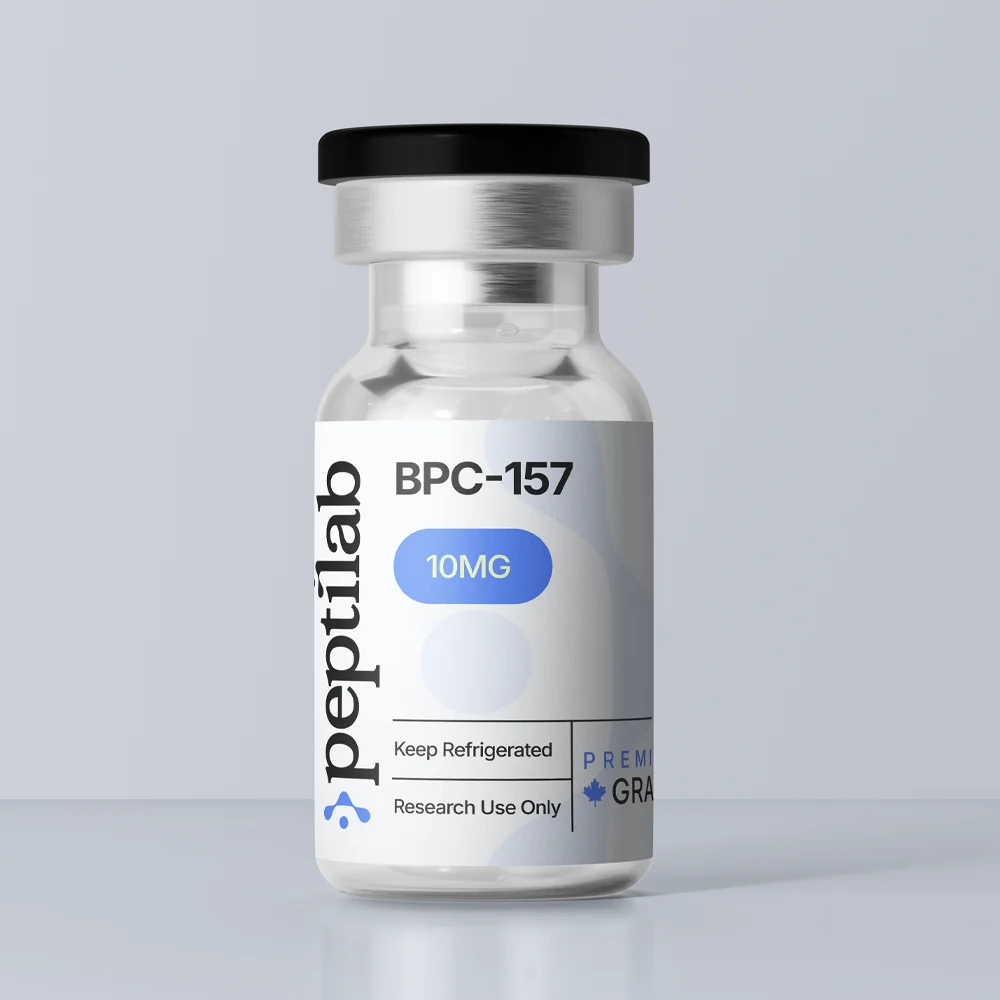
BPC-157 Research: What the Science Says About This Peptide
BPC-157 is one of the most studied peptide compounds in contemporary research literature. First identified as a partial sequence of the body protection compound found in gastric juice, this 15-amino acid peptide has attracted significant attention from researchers investigating tissue biology, angiogenesis, and cellular signalling pathways.
This article provides an overview of the published research landscape around BPC-157 for scientists and researchers who want to understand where this compound stands in the academic literature.
What Is BPC-157?
BPC-157 (Body Protection Compound 157) is a synthetic pentadecapeptide derived from a protein found in human gastric juice. It carries the amino acid sequence Gly-Glu-Pro-Pro-Pro-Gly-Lys-Pro-Ala-Asp-Asp-Ala-Gly-Leu-Val. The compound was first described in research from the laboratory of Predrag Sikiric at the University of Zagreb, where a substantial body of in vitro and in vivo research has been conducted over three decades.
As a research compound, BPC-157 is categorized as research use only (RUO) and is available in lyophilized powder form for laboratory research applications.
Key Research Areas
Tissue and Cellular Biology
A significant portion of research has focused on tissue models. Studies published in peer-reviewed journals have examined how BPC-157 influences fibroblast activity and proliferation in in vitro models. Researchers have also studied its effects on growth factor expression, particularly VEGF (vascular endothelial growth factor), in various cellular environments.
Gastrointestinal Research Models
Given its origin as a gastric protein sequence, early research concentrated heavily on gastrointestinal models. Laboratory studies using rat models examined mucosal integrity, fistula healing, and inflammatory markers. This body of work represents the most robust published literature base for the compound.
Musculoskeletal Research Models
A substantial number of animal model studies have investigated BPC-157 in the context of tendon and muscle tissue. Research published in journals including the Journal of Physiology-Paris and Current Pharmaceutical Design has examined how the compound interacts with collagen synthesis pathways and tendon fibroblasts in controlled laboratory conditions.
Neurological Research
More recent research has extended to neurological models, examining BPC-157’s interactions with dopaminergic and serotonergic pathways in animal studies. These studies remain in early-stage animal model research and represent an emerging area of investigation.
What Researchers Should Know About Sourcing BPC-157
The quality of a peptide compound is directly tied to the research outcomes it can support. When sourcing for laboratory use, researchers should prioritize:
- Purity verification: Look for compounds with ≥99% purity confirmed by independent third-party HPLC (High-Performance Liquid Chromatography) analysis.
- Certificate of Analysis (COA): Every batch should have a current, batch-specific COA available. This is non-negotiable for research integrity.
- Lyophilized form: Lyophilized powder provides superior stability for storage and reconstitution compared to pre-dissolved solutions.
- Canadian source: Sourcing from a Canadian supplier reduces import delays and potential customs complications for research labs.
Storage and Handling in Research Settings
BPC-157 in lyophilized form is stable at room temperature for short-term storage but should be kept at -20°C for long-term preservation. Once reconstituted with bacteriostatic water or sterile saline, the solution should be stored at 4°C and used within a reasonable timeframe as determined by your lab’s protocols.
All handling should be conducted in accordance with standard laboratory safety procedures.
Where to Source Research-Grade BPC-157 in Canada
PeptiLab offers research-grade lyophilized in powder form, supplied with a full third-party Certificate of Analysis confirming ≥99% purity. All products ship from Canada with standard and express shipping options available.
All PeptiLab peptides are sold for research use only and are not intended for human or animal consumption.


