
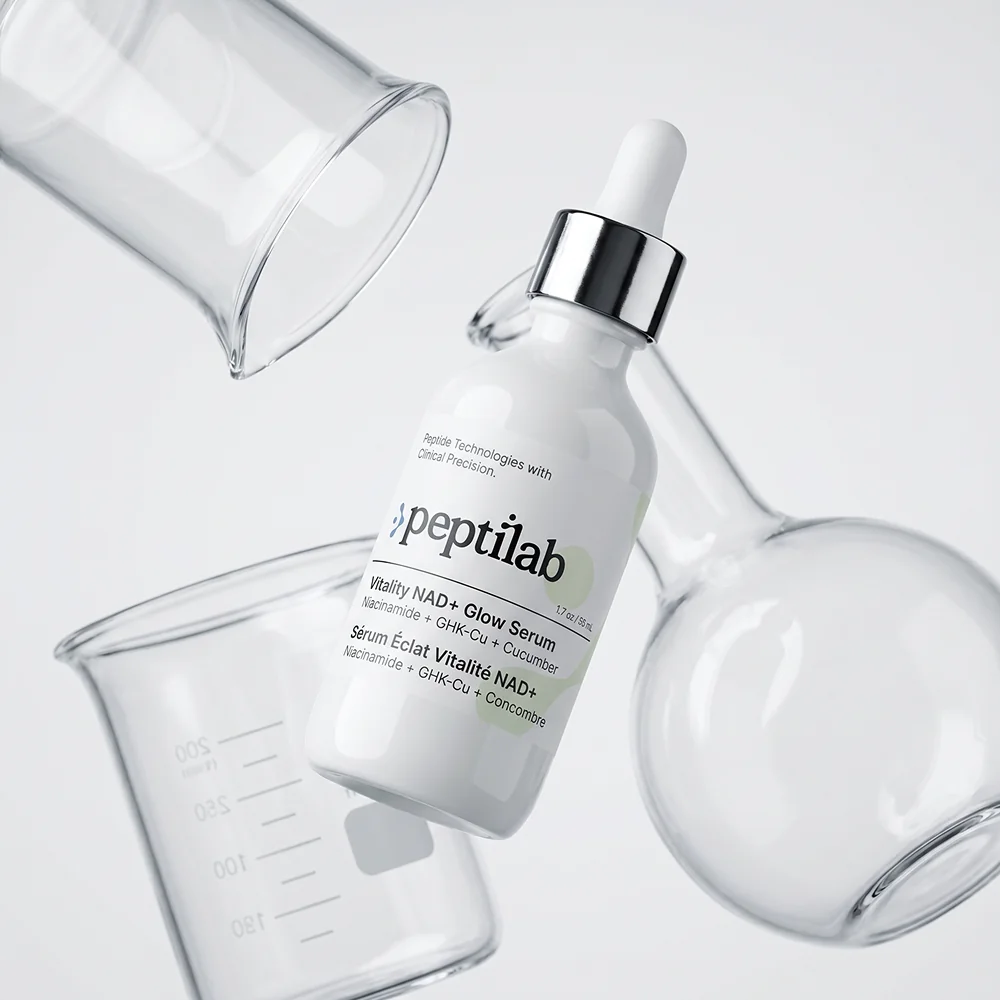
Niacinamide has quietly become one of the most validated ingredients in modern skincare. Unlike some actives that ride trend cycles, niacinamide has decades of peer-reviewed research behind it — and its profile keeps getting stronger as researchers investigate its relationship with NAD+ metabolism and cellular energy at the skin level.
This article breaks down what niacinamide is, what the science says, and how it fits into an evidence-based skincare routine.
What Is Niacinamide?
Niacinamide is the amide form of vitamin B3 (niacin). It is water-soluble, stable across a wide pH range, and well-tolerated by most skin types including sensitive and acne-prone skin. Unlike niacin, niacinamide does not cause flushing when applied topically or taken orally.
In skin biology, niacinamide functions as a precursor to NAD+ (nicotinamide adenine dinucleotide) — a coenzyme involved in hundreds of cellular metabolic reactions. NAD+ levels in skin cells decline with age and UV exposure, and niacinamide’s role as a replenishment pathway for NAD+ has made it a compound of interest in both skincare and longevity research.
What the Research Says
Barrier Function and Ceramide Synthesis
One of niacinamide’s most well-documented effects is its ability to stimulate ceramide synthesis in the skin. Ceramides are the primary lipid component of the skin barrier, and their depletion is associated with transepidermal water loss, sensitivity, and accelerated visible aging. Published studies have demonstrated that topical niacinamide at concentrations of 2–5% meaningfully increases ceramide levels and improves barrier integrity over 4–8 weeks of use.
Hyperpigmentation and Melanin Transfer
Niacinamide has been studied as an inhibitor of melanosome transfer — the process by which melanin pigment moves from melanocytes into keratinocytes, resulting in visible darkening of the skin. Clinical studies have demonstrated measurable reduction in hyperpigmentation and uneven skin tone with consistent use of 4–5% niacinamide formulations over 8–12 weeks. This effect is distinct from skin-bleaching mechanisms and is considered a safe approach to tone evening across skin types.
Sebum Regulation
Research has examined niacinamide’s effect on sebaceous gland activity. Studies suggest that topical niacinamide can reduce sebum excretion rates, making it particularly relevant for oily and combination skin types and in formulations targeting acne-prone skin without the irritation associated with retinoids or acids.
Antioxidant and Anti-Inflammatory Effects
Via its role in NAD+ metabolism, niacinamide supports the activity of SIRT1 and PARP enzymes involved in DNA repair and oxidative stress management at the cellular level. This has made niacinamide a subject of interest in research examining photoprotection and UV-induced damage modulation when used alongside sunscreen.
How to Use Niacinamide Effectively
- Concentration: 2% is the minimum effective concentration for barrier benefits. 4–5% is the range studied for pigmentation and sebum effects. Most clinical evidence caps out at 10% — above this, tolerance varies and additional benefit is minimal.
- Layering: Niacinamide is compatible with most actives. It can be used alongside retinoids, peptides, hyaluronic acid, and SPF. The old concern about combining with vitamin C is largely overstated at modern formulation pH levels.
- Timing: Niacinamide works well in both AM and PM routines. Its antioxidant support makes it a useful morning ingredient under SPF.
- Consistency: Barrier and pigmentation benefits require consistent use over 6–12 weeks. It is not a rapid-result ingredient.
PeptiLab’s Approach to Niacinamide
PeptiLab formulates with evidence-backed concentrations of niacinamide alongside complementary actives including GHK-Cu. Our products are produced in Canada in compliance with Health Canada cosmetics regulations.
All skincare products are cosmetic formulations intended for topical use only.


