
Hair thinning and scalp health have become a serious focus of cosmetic science over the past decade, and one ingredient keeps appearing at the centre of that research: GHK-Cu. The same copper peptide complex studied extensively in facial skincare has accumulated a meaningful body of evidence in scalp biology — and it’s now a primary active in a growing number of evidence-informed scalp serums.
This article covers what GHK-Cu does at the scalp level, what the published research says, and what to look for when choosing a scalp serum.
Why the Scalp Is Different from Facial Skin
The scalp is the most sebaceous skin surface on the body, with the highest concentration of hair follicles and sebaceous glands per square centimetre. This creates a unique environment where follicle health, scalp microbiome balance, and dermal blood flow are all interconnected factors in hair cycling.
Hair follicles cycle through growth phases (anagen), regression (catagen), and resting (telogen). Factors including oxidative stress, DHT sensitivity, poor scalp circulation, and nutrient deficiency can shorten the anagen phase and push follicles into telogen prematurely — the mechanism behind most non-scarring hair thinning.
GHK-Cu and Scalp Research
Follicle Stimulation Models
Published research has examined GHK-Cu in the context of hair follicle biology. Studies have demonstrated that GHK-Cu can stimulate follicle size and extend the anagen (growth) phase in laboratory models. Work published in Skin Pharmacology and Physiology found that GHK-Cu promoted hair follicle enlargement in a dose-dependent manner, positioning it as a compound of interest for scalp formulation research.
Scalp Microcirculation
GHK-Cu’s role in promoting VEGF expression — studied extensively in wound healing and angiogenesis models — has implications for scalp health. Dermal papilla cells, which control follicle activity, are highly sensitive to local blood flow and oxygen availability. Research examining GHK-Cu’s influence on vascular endothelial growth factor pathways suggests potential relevance to scalp microcirculation in topical formulations.
Antioxidant Protection at the Follicle
Oxidative stress at the follicle level is a documented contributor to premature follicle miniaturisation. GHK-Cu’s well-established antioxidant activity — including upregulation of superoxide dismutase — makes it relevant in formulations designed to protect the follicular environment from oxidative damage.
What to Look for in a GHK-Cu Scalp Serum
Not all scalp serums are equal. Key criteria:
- GHK-Cu as a named active: Look for glycyl-L-histidyl-L-lysine or copper tripeptide-1 in the INCI ingredient list. Vague “peptide complex” labelling is not a substitute.
- Concentration and delivery: GHK-Cu needs to penetrate to the dermal papilla to be effective. Look for formulations using a lightweight, low-viscosity carrier that allows follicular penetration rather than sitting on the surface.
- Complementary actives: The strongest scalp serums pair GHK-Cu with supporting ingredients such as niacinamide (scalp barrier and sebum regulation), caffeine (microcirculation), or saw palmetto (DHT pathway support).
- No silicones or heavy occlusive agents: These block follicular penetration and can worsen scalp congestion over time.
- Canadian formulation: Health Canada cosmetics regulations require accurate ingredient listing and prohibit drug claims — a baseline protection for consumers.
Consistency Is Everything
Hair cycling operates on a 3–6 month timeline. Unlike skincare, where barrier benefits from niacinamide can be measured in 4–8 weeks, scalp serum results require sustained use over a full hair cycle before meaningful assessment is possible. Any product promising rapid transformation should be viewed with scepticism.
PeptiLab’s Crown Follicle Code Scalp Serum
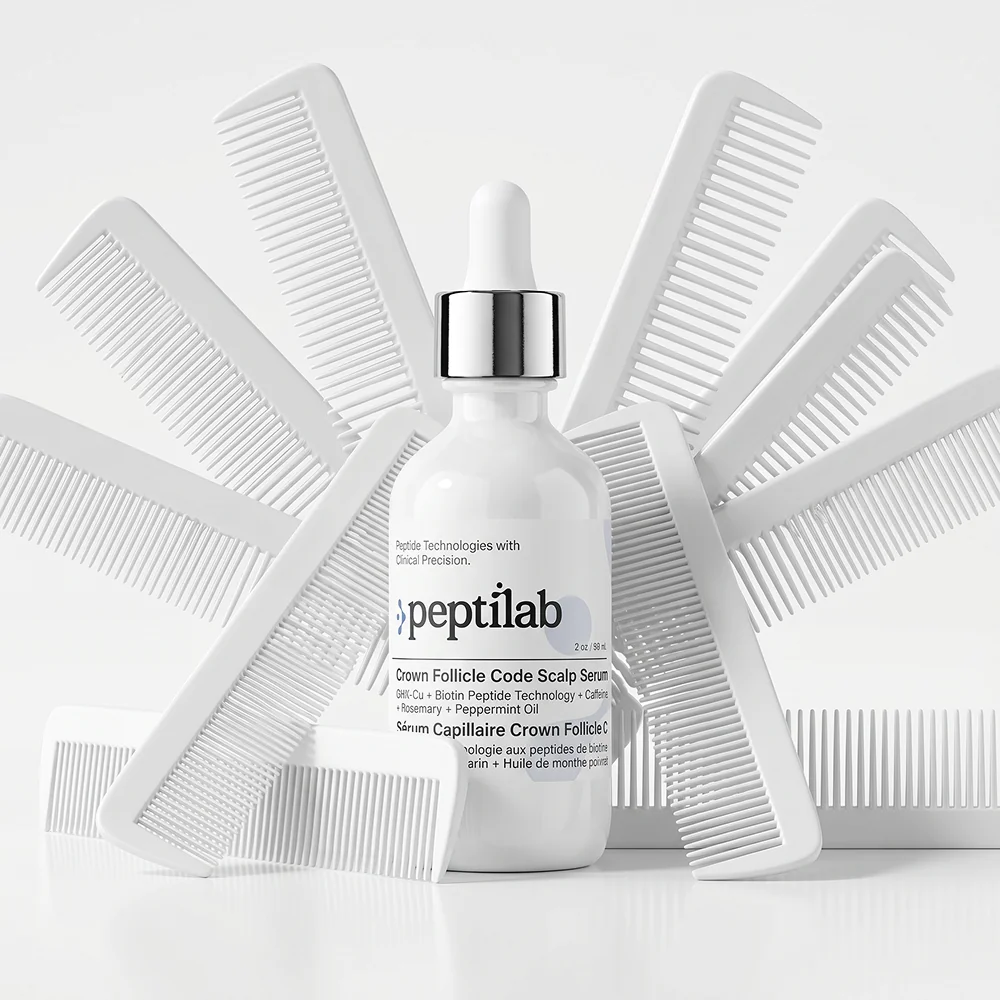
PeptiLab’s Crown Follicle Code Scalp Serum is formulated with GHK-Cu as the primary active, developed for the scalp environment, and produced in Canada in compliance with Health Canada cosmetics regulations.
All skincare products are cosmetic formulations intended for topical use only.


