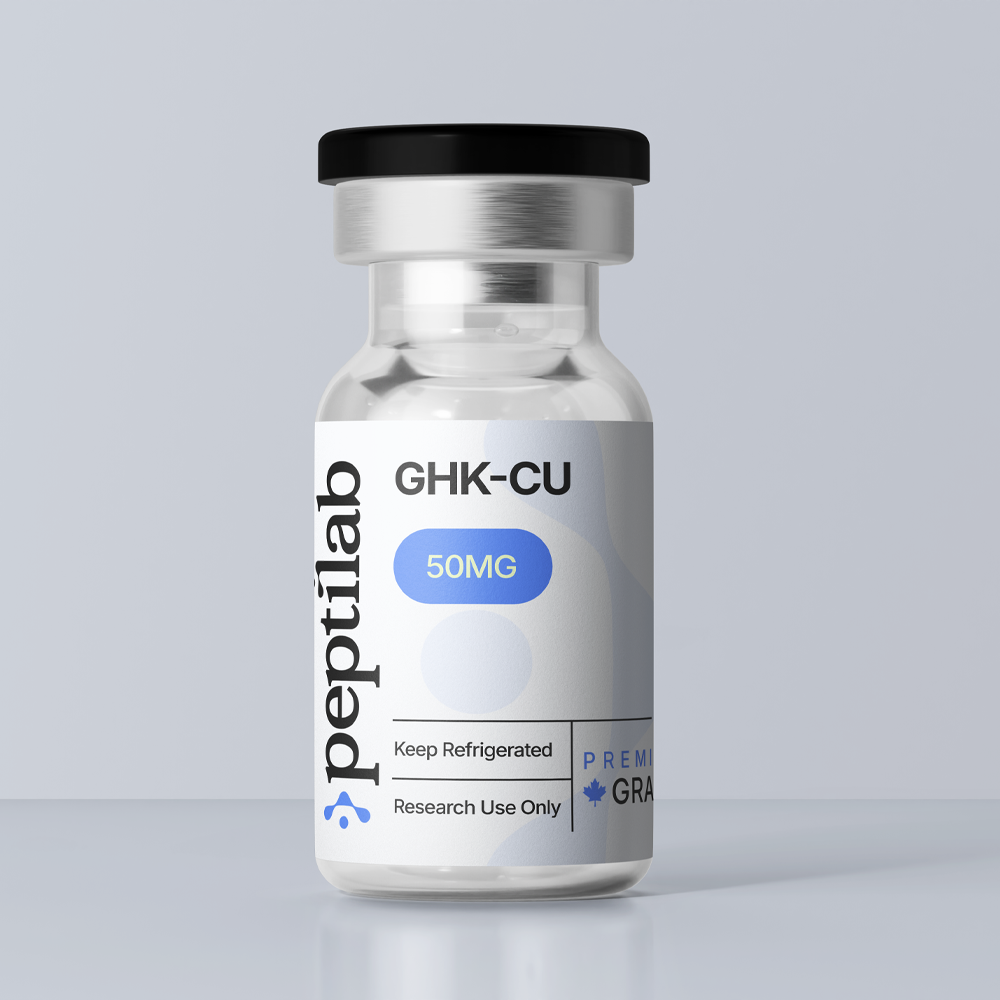
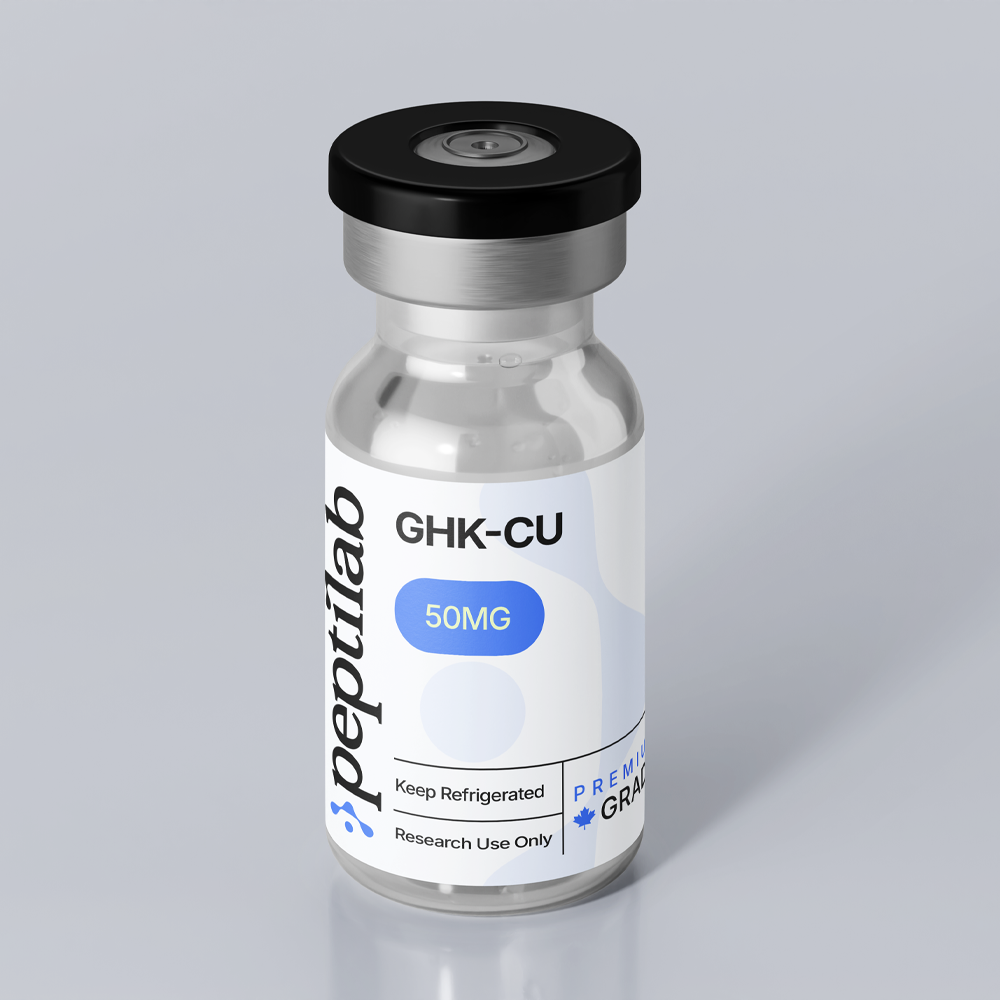
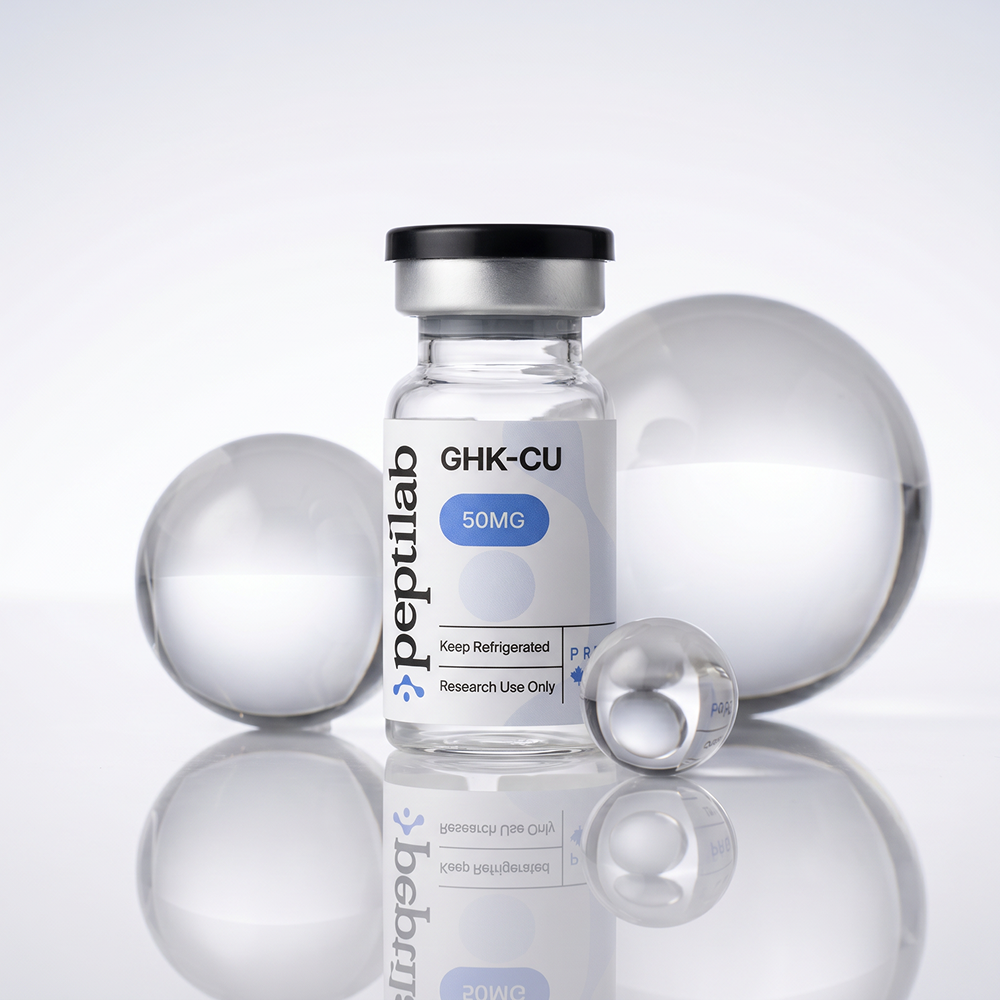
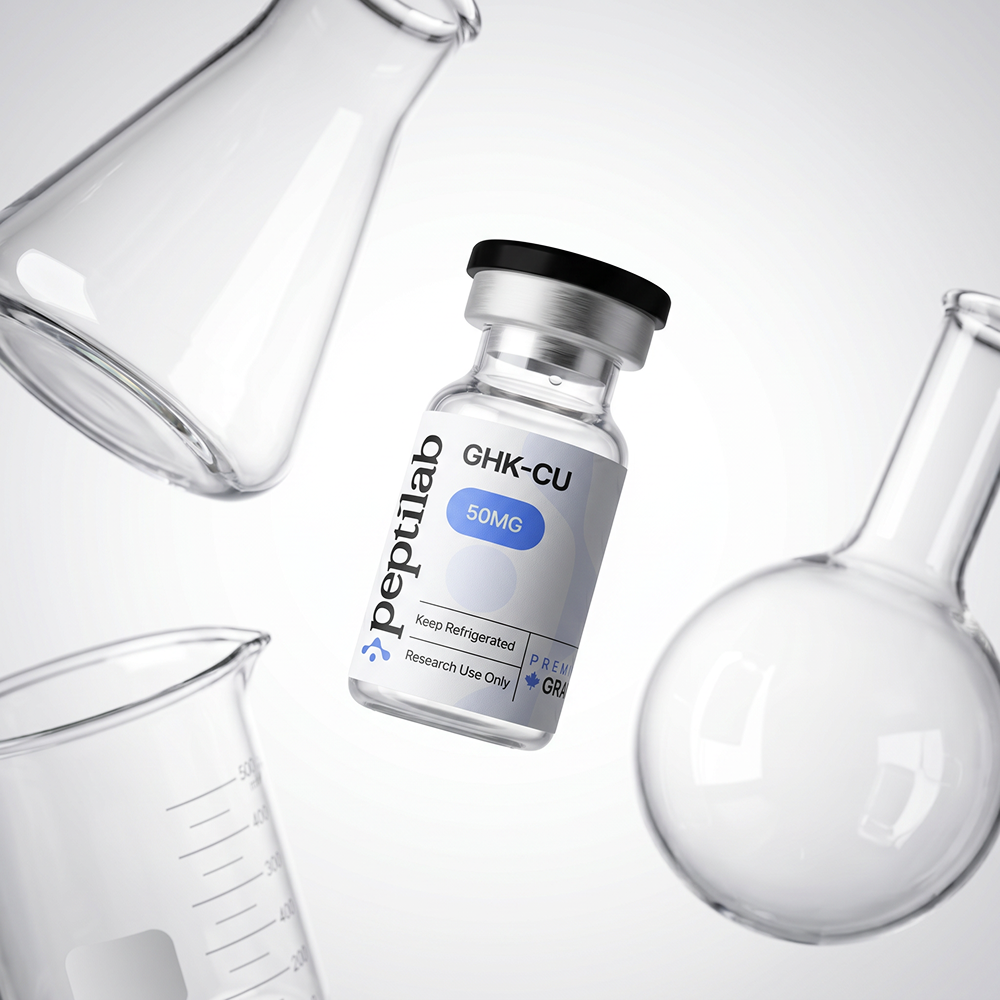
GHK-Cu (50 mg)

$59.00

  • Third-party tested
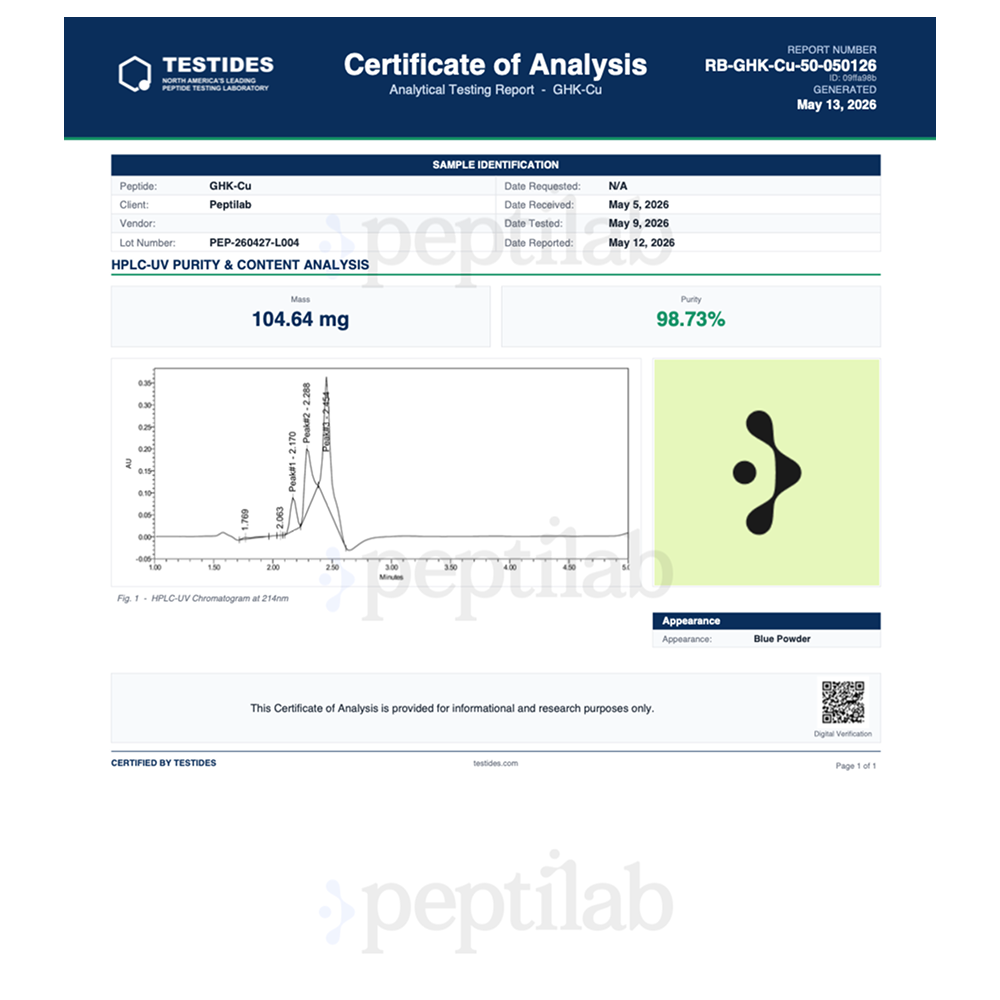
  • COA included
  • Ships from Canada
  • Secure checkout
Buy More, Save More
Quantity Price / Per Vial
1 – 2$59.00
3 – 4$56.05
5 – 9$53.10
10+$47.20
Bulk deal
Quantity Discount Discounted price
3 – 4 5% $56.05
5 – 9 10% $53.10
10 – 100 20% $47.20

GHK-Cu (Copper(II) Tripeptide-1) is a naturally occurring copper complex composed of the tripeptide bound to copper ions. It is one of the most extensively studied copper-binding peptides in cellular biology research, with significant scientific interest surrounding its role in molecular signaling, extracellular matrix regulation, antioxidant pathways, and tissue remodeling mechanisms.

Originally identified as a naturally occurring peptide complex in human plasma and other biological tissues, GHK-Cu has become a widely referenced research compound for investigating cellular communication and age-related biological processes. Laboratory studies have explored its interactions with pathways associated with collagen-related signaling, gene expression regulation, oxidative stress responses, and cellular repair mechanisms.

Supplied as a lyophilized powder, GHK-Cu is intended exclusively for laboratory and in vitro research applications. Each production batch undergoes independent third-party analytical testing to help verify purity, identity, and consistency for scientific investigations.

Product Specifications

Specification Details
Product Name GHK-Cu (Copper(II) Tripeptide-1)
Peptide Content 50 mg per vial
Compound Type Copper-Binding Tripeptide Complex
Composition Gly-His-Lys Bound to Copper(II)
Purity ≥99%
Form Lyophilized Powder
Application Laboratory Research Only
Testing Independent Third-Party Testing

Research Profile

GHK-Cu is widely investigated due to its ability to participate in copper-dependent biological signaling pathways. Copper is an essential trace element involved in numerous cellular processes, and GHK-Cu provides researchers with a model for studying copper-mediated peptide activity.

Laboratory investigations have explored GHK-Cu’s potential involvement in:

  • Collagen synthesis pathways
  • Extracellular matrix regulation
  • Antioxidant gene expression
  • Cellular signaling mechanisms
  • Fibroblast activity
  • Tissue remodeling pathways
  • Copper-dependent biological processes
  • Cellular stress responses
  • Protein expression regulation
  • Regenerative biology models

Researchers continue to examine how GHK-Cu influences molecular communication and cellular behavior in controlled experimental environments.

Collagen & Extracellular Matrix Research

One of the most studied areas involving GHK-Cu is extracellular matrix biology. Researchers investigate how copper peptide signaling interacts with pathways associated with structural proteins and connective tissue organization.

Current research models examine:

  • Collagen-related signaling
  • Fibroblast cellular activity
  • Extracellular matrix composition
  • Tissue structure regulation
  • Cellular communication
  • Protein synthesis pathways
  • Matrix remodeling mechanisms

These investigations contribute to a deeper understanding of how peptide-based signaling influences tissue organization and cellular maintenance.

Antioxidant & Cellular Stress Research

GHK-Cu is frequently studied for its relationship with antioxidant-related gene expression and cellular stress response mechanisms.

Laboratory research explores:

  • Oxidative stress pathways
  • Antioxidant gene regulation
  • Cellular defense mechanisms
  • Molecular adaptation responses
  • Cellular homeostasis
  • Stress-related signaling networks

These studies help researchers understand the role of copper-binding peptides in maintaining cellular balance and regulating molecular responses.

Skin & Tissue Biology Research

GHK-Cu has become an important compound in laboratory studies involving skin biology and tissue remodeling due to its interactions with extracellular matrix pathways.

Research applications include:

  • Skin cell biology
  • Fibroblast research
  • Tissue remodeling models
  • Cellular regeneration studies
  • Peptide signaling research
  • Structural protein regulation

Researchers use GHK-Cu as a tool to investigate the molecular mechanisms underlying tissue organization and cellular communication.

Molecular & Cellular Research

Beyond tissue-focused studies, GHK-Cu is utilized in molecular biology research examining peptide-mediated signaling and copper regulation.

Areas of investigation include:

  • Gene-expression pathways
  • Cellular signaling networks
  • Copper transport mechanisms
  • Protein regulation
  • Cell communication
  • Molecular aging research
  • Cellular repair pathways

Ongoing studies continue to expand scientific understanding of copper peptide activity and its role in cellular biology.

Product Care

To help maintain product quality and stability:

  • Store in a cool, dry place away from direct sunlight.
  • Protect from excessive heat, moisture, and light.
  • Store according to established laboratory protocols.
  • Avoid repeated freeze-thaw cycles when possible.
  • Handle using appropriate sterile laboratory techniques.
  • Maintain proper storage conditions after reconstitution.

Product Note

All products are supplied as lyophilized (freeze-dried) powder and require reconstitution before laboratory use.

Each batch undergoes independent third-party testing to verify purity, identity, and quality, supporting reliable and reproducible research outcomes.

This product is intended strictly for scientific research purposes. It is not intended for human consumption, cosmetic use, veterinary use, diagnostic procedures, or therapeutic applications.

Frequently Asked Questions

What is GHK-Cu?

GHK-Cu is a naturally occurring copper-binding tripeptide complex consisting of Gly-His-Lys bound with copper(II). It is widely researched for its role in cellular signaling, extracellular matrix biology, and copper-dependent molecular pathways.

What is GHK-Cu studied for?

Researchers investigate GHK-Cu in laboratory models involving collagen-related pathways, antioxidant gene expression, tissue remodeling, cellular signaling, fibroblast biology, and molecular regulation.

What form is GHK-Cu supplied in?

GHK-Cu is supplied as a lyophilized powder, providing stability during storage and transportation before laboratory preparation.

Is GHK-Cu the same as copper peptide cream?

GHK-Cu is the active copper peptide compound studied in laboratory research. Cosmetic formulations such as copper peptide creams may contain GHK-Cu or related copper peptide ingredients, but this research product is supplied specifically for scientific applications.

Is GHK-Cu intended for human use?

No. GHK-Cu is supplied exclusively for laboratory research and is not approved for human consumption, cosmetic application, medical treatment, or therapeutic use.

Add a review
GHK-Cu (50 mg) GHK-Cu (50 mg)
Rating*
0/5
* Rating is required
Your review
* Review is required
Name
* Name is required
5.0
Based on 7 reviews
5
100
100%
4
0%
3
0%
2
0%
1
0%
1-5 of 7 reviews
  1. I

    Product received
    can’t wait to get started!!

  2. T

    Amazing product! thank you for the extra discount code

  3. S

    Just wow Im addicted thank you

  4. P

    Amazing thank you! My skin looks amazing. Told all my friends ❤️

  5. JS

    5/5. Amazing deal when buying 10.